Summertime is finally arriving at Oceanside Wild. After a snowy winter that was nowhere near as cold and unforgiving as the ones we endured in Ontario, there has been the long wait for temperatures to climb, winds to moderate, and spring fogs to clear. We are just off the eastern extent of Canada's huge landmass, separated by the Canso Causeway, on Cape Breton Island's wild east coast, off mainland Nova Scotia, facing out to the open north Atlantic.
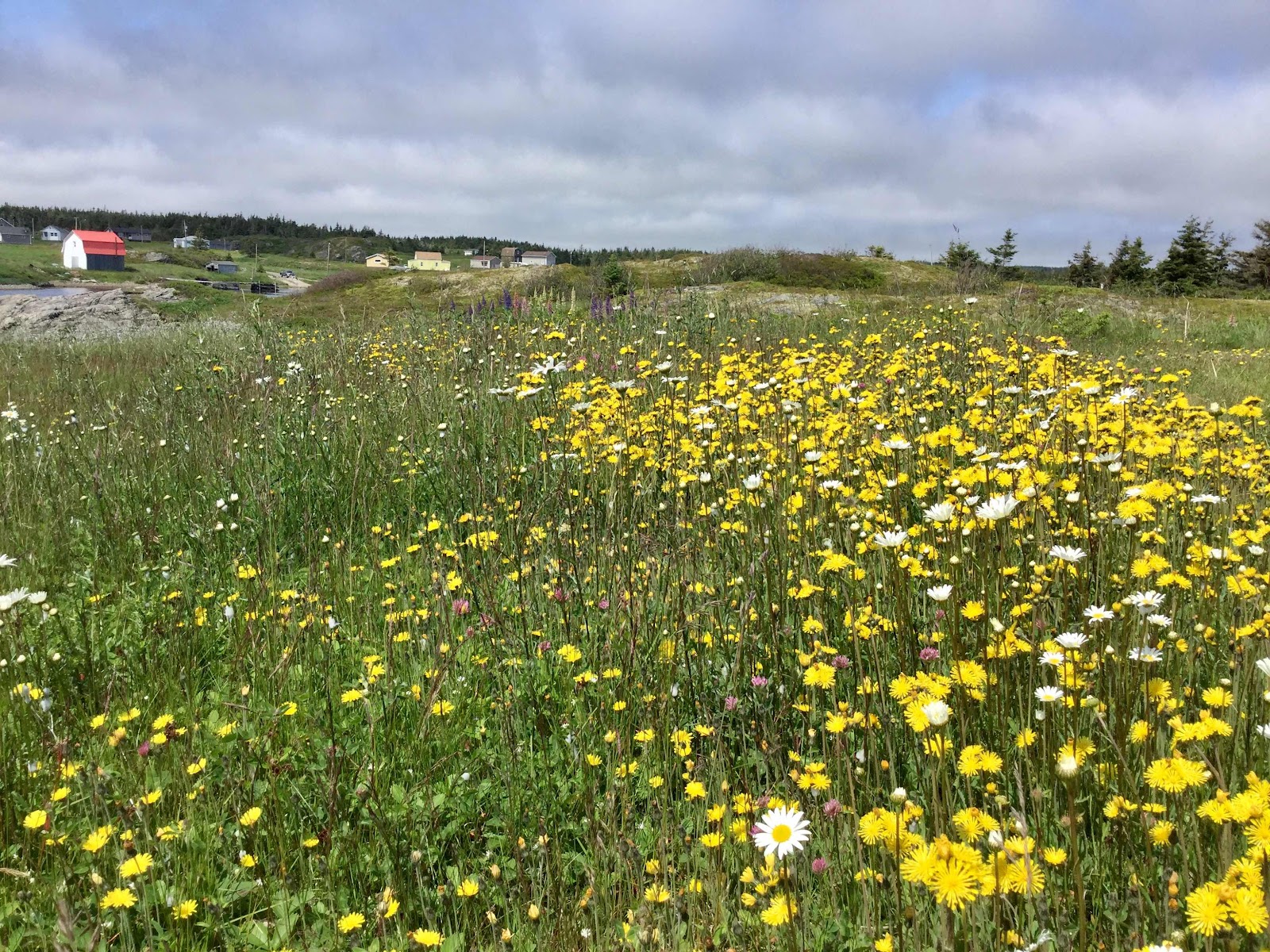
Lobster fishing season here coincides with the main season of fogs as the cold sea temperatures catch up to the slowly-warming land. Now, in mid-July, the boats in the cove and the spring peepers in the pond relent their activity, our cove goes quiet, and the glory days of summer begin. Already, the wild flowers in our reborn meadow are in full bloom - hawkweeds, oxeye daisies, strawberries, clovers, long-eared grasses mostly, with knapweed to follow. We stopped cutting the grass last year, except for push-mower cut paths for access to the dock and beach. There, seaweeds wash up, bladderwracks and egg wracks are exposed by low tide and - joy of joys - we get to swim in the clear, salty sea, floating freely as puffy clouds scoot by in the deep blue sky.

Our ark looks our over two 'barrachois' freshwater ponds formed by rainfall drainage from the land meeting the stone-and-pebble beach barrier cast by the sea. Black ducks and wigeons migrate between sweet water and salt, cajoling their ducklings in a tight trail behind them. They nest, they sleep, they forage. They swim, they dive, they play, they grow. What a life, the living on an ark! Most of all, they listen to their Mom and she nurtures them from hatchlings to independents within weeks. By and large, they share the pond and seascape with the crows and the gulls who each work hard to see off the predatory eagles. The blue herons are still to arrive and we are yet to see a red fox this year. Red squirrels, yes; we have a few chirruping away.

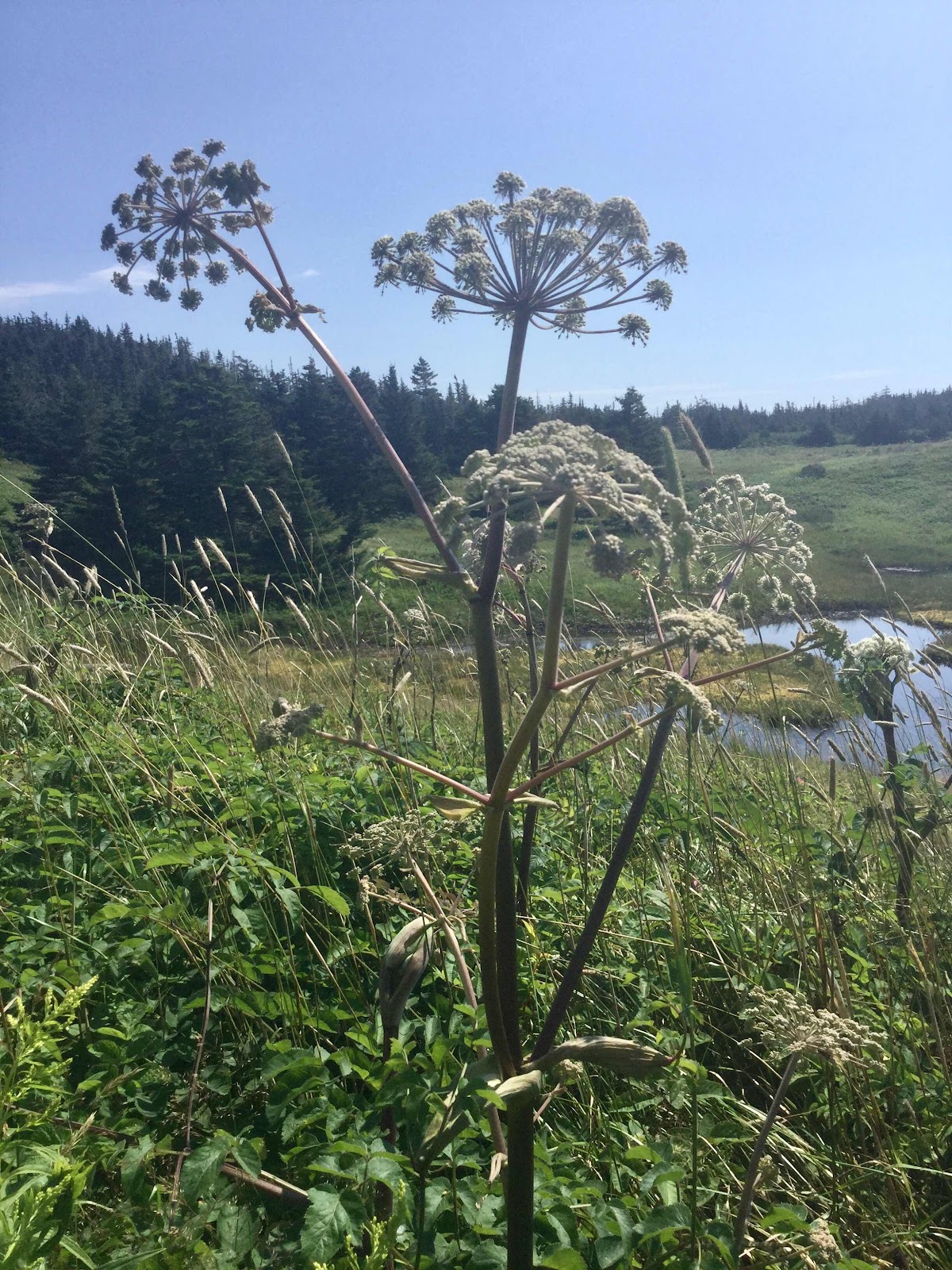
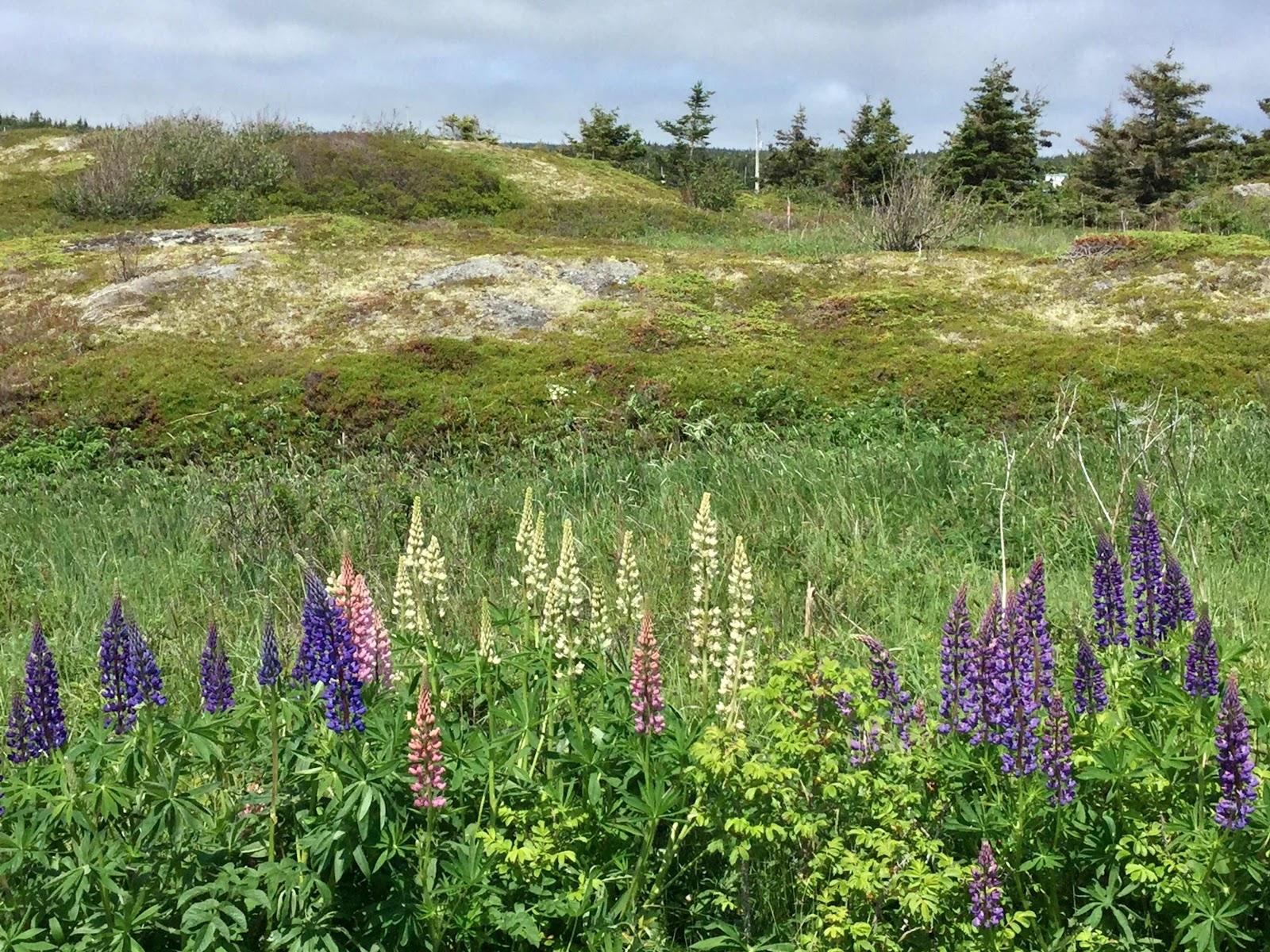
Walks around to the headland and the open ocean are past hillsides of wild angelica and blueberries, on spongy carpets of crowberries, moss, lichens, and spruce and balsam fir wooded trails interspersed with stony beaches. The blueberries, strawberries, raspberries, bunchberries are flowering now, soon to turn into delectable fruit. Needless to say, all these things - the birds, the frogs, the flowers, the berries, the trees, the seaweeds - have chosen this place to grow wild and free. At this ark, we shall treasure them all, through every season, always.